
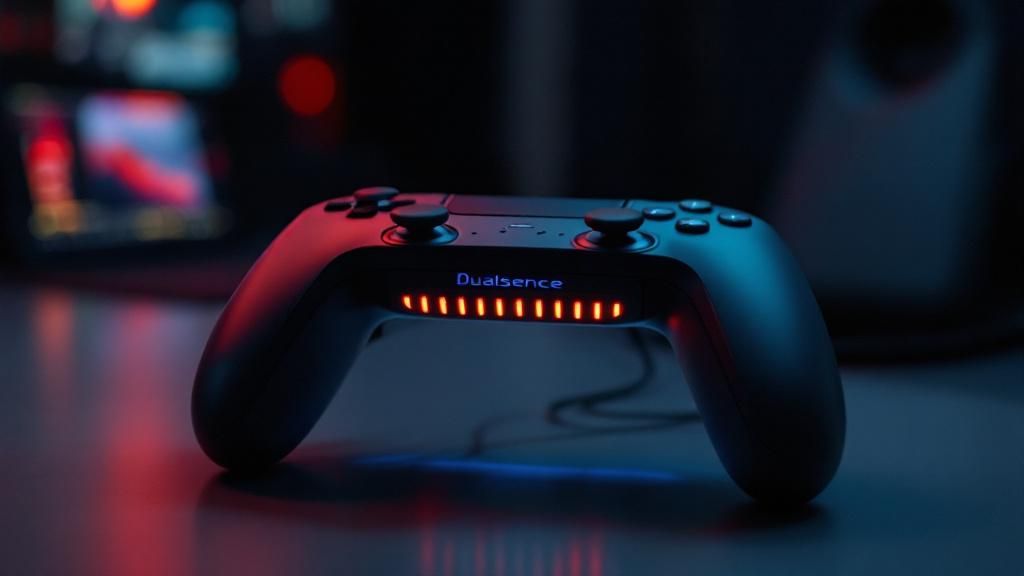
The PlayStation 5’s DualSense controller marks a major breakthrough in gaming immersion, transforming how players experience gaming experiences through cutting-edge haptic feedback technology. This innovative controller goes beyond conventional vibration systems, providing subtle tactile feedback that blur the line between digital and physical. From the subtle resistance of a bowstring to the rumble of an engine, the DualSense’s sophisticated haptic systems produce remarkable sensory experiences. This article examines the groundbreaking technologies powering these innovations and assesses how they’re reshaping the realm of next-generation gaming.
Advanced Tactile Feedback Technology
The DualSense controller’s haptic response technology represents a groundbreaking innovation in gaming peripheral design, fundamentally transforming how players perceive and interact with immersive spaces. Unlike traditional vibration systems, the dual haptic actuators within the DualSense employ advanced haptic systems to deliver refined haptic responses across a broad spectrum of vibration patterns and force levels. This innovative methodology enables developers to craft highly intricate haptic sensations that adjust continuously to gameplay occurrences, whether reproducing the tactile quality of distinct surfaces, the weapon recoil, or the subtle vibrations of world interactions that had previously gone undetected to players.
The technology underpinning the DualSense’s haptic feedback operates through advanced linear resonant actuators (LRAs) carefully positioned inside the controller’s grip. These complex mechanisms can produce haptic effects to remarkable precision, enabling fast frequency adjustments and strength variations that produce compelling sensory feedback. The system’s ability to deliver both high-frequency tremors and bass-level vibrations simultaneously allows developers to stack various haptic effects, delivering layered haptic experiences that enhance gaming immersion and engagement during long play periods.
Integration of haptic feedback with the controller’s dynamic tension technology creates a immersive tactile ecosystem that elevates gameplay to extraordinary levels of immersion and engagement. Players feel genuine resistance when pulling a trigger, with the controller continuously modulating tension based on in-game situations. This symbiotic relationship between haptic feedback and adaptive triggers ensures that tactile sensations feel authentic and responsive, encouraging players to interact more thoughtfully with their in-game world and building stronger emotional bonds to gaming narratives.
The sophistication of the DualSense’s haptic implementation extends beyond simple vibration patterns, integrating AI-driven systems that evaluate in-game information in real-time. This adaptive system optimises tactile feedback according to personal player choices, environmental conditions, and play contexts, ensuring tailored sensory responses. Developers can utilise extensive feedback design systems that support the development of tailored response patterns, allowing remarkable creative scope in designing engaging interactive gameplay that respond authentically to user inputs and in-game environmental changes.
Industry adoption of DualSense haptic technology has catalysed a fundamental shift in game design philosophy, with developers more and more prioritising tactile feedback as a central part of gameplay rather than a secondary addition. Leading titles demonstrate the game-changing possibilities of sophisticated haptic implementation, illustrating how refined haptic effects improve player agency and emotional connection. As developers continue exploring the technology’s capabilities, haptic feedback is set to be an indispensable component of the next generation of games, significantly changing how players perceive and interact with interactive entertainment across diverse genres and experiences.
Adaptive Trigger Advancement and Immersive Gaming Experience
The DualSense controller’s dynamic trigger system showcase a fundamental change in interactive gaming, introducing adjustable tension that dynamically adjusts to in-game scenarios. These sophisticated mechanisms enable developers to recreate realistic tactile experiences, from drawing a bow to speeding up a car, creating unprecedented tactile feedback. Players feel authentic force that responds to gameplay mechanics, transforming controller inputs into situation-specific responses that heighten immersion and engagement throughout gameplay experiences.
Adaptive Opposition and Player Involvement
Adaptive triggers fundamentally change how players engage with virtual environments by offering incremental resistance that mirrors real-world mechanics. Whether holding a firearm, managing mechanical systems, or executing complex manoeuvres, the triggers’ variable tension creates authentic physical responses. This advancement ensures that every control input feels intentional and authentic, substantially improving the perception of involvement within game worlds and intensifying emotional connection in gameplay narratives.
The technology enables creators to craft sophisticated game mechanics previously impossible with conventional controllers. Responsive triggers allow for precise difficulty tuning, where force builds proportionally to gameplay challenges, delivering intuitive feedback without visual cues. This smooth combination of haptic response and game mechanics creates more intuitive control schemes, minimising player fatigue and allowing players to focus entirely on engaging gameplay.
Industry Impact and Emerging Opportunities
Adaptive trigger technology has fuelled broad sector uptake, with developers across multiple platforms recognising its revolutionary impact. From action-adventure titles to sports simulations, this innovation has become fundamental to contemporary game design, enhancing production values and player satisfaction. The technology’s versatility demonstrates how thoughtful hardware innovation can significantly redefine gaming experiences and establish new industry standards for immersion.
Looking forward, adaptive trigger technology promises even greater sophistication as developers harness its capabilities. Future implementations may integrate machine learning algorithms that personalise resistance patterns based on individual player preferences and skill levels. This evolutionary approach ensures gaming experiences remain fresh and engaging, cementing the DualSense’s position as a foundational innovation driving the future of gaming innovation.
Emerging Interactive Entertainment
The DualSense controller’s haptic feedback system is positioned to define fresh industry benchmarks, with developers increasingly acknowledging its potential to enhance storytelling and player engagement. As gaming design develops, haptic feedback shall be integral to narrative delivery, letting players tangibly experience emotional beats and world shifts. This transformation pledges to transform gaming from a primarily visual and auditory medium into a comprehensive multisensory medium that engages audiences in unprecedented ways.
Looking forward, the integration of haptic technology with artificial intelligence alongside machine learning will allow controllers to adjust responses in real-time based on player actions and preferences. Such advancements could create personalised gaming experiences where physical sensations adjust fluidly to unique playing approaches, challenge levels, and emotional involvement. This coming together of technologies represents an thrilling frontier where gaming becomes increasingly immersive and adaptive to every player’s specific needs.
The DualSense controller showcases how deliberate design improvement can profoundly alter interactive entertainment. As developers keep investigating haptic possibilities and consumers welcome these immersive features, the gaming industry will inevitably undergo a revolutionary period. The future promises gaming experiences that transcend traditional boundaries, delivering extraordinary amounts of immersion and engagement that will redefine player expectations for generations to come.
